
How to Choose Solar Panels: A Practical Guide for Homes and Businesses
How many panels you need, how much roof they take, what efficiency and warranty really mean, and which inverter fits: what to check before buying solar panels.
5 November 2026, 07:44
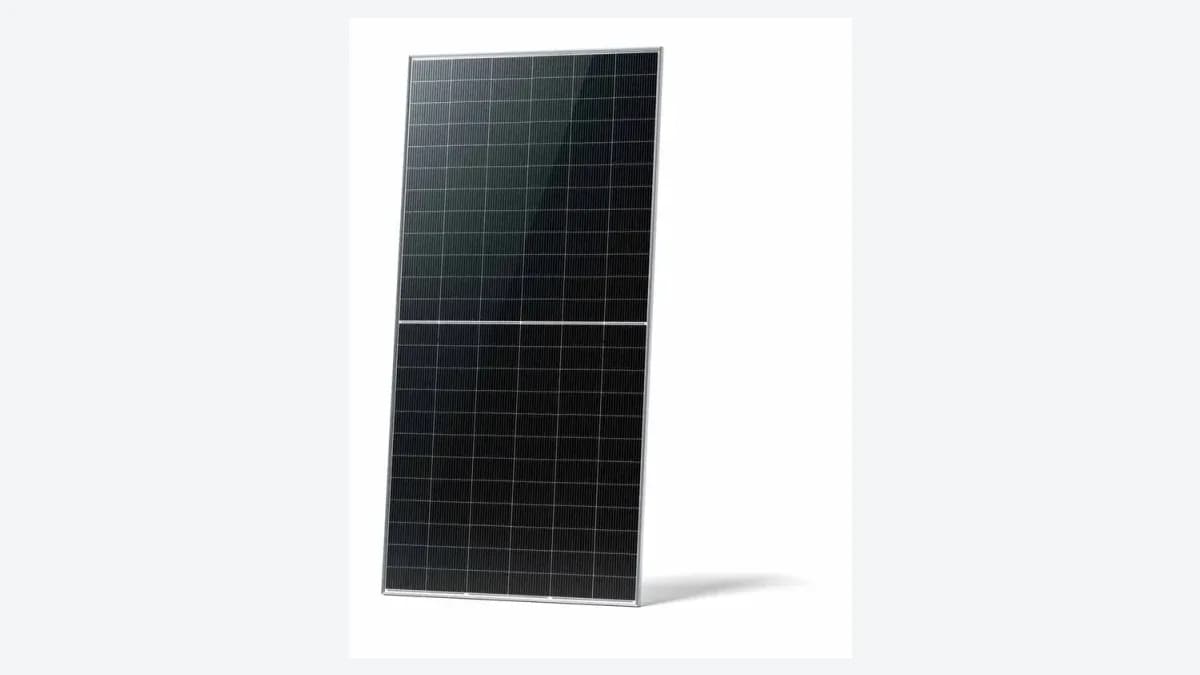
When choosing solar panels, most people look at the wattage first. The right choice starts elsewhere: how much electricity you use, how much roof you have and what you expect from the system. Without those three answers, even a high-wattage panel may not deliver what you need.
1. How much electricity do you use?
Take the monthly kWh figure from your bill, ideally across the last twelve months, because winter and summer use differ. Timing matters too: panels only generate during the day. If your main load is in the daytime (an office, a shop, a cold store), the energy is used directly. If it is in the evening, a battery becomes worth considering.
How much one kW of panels produces in a year depends on the address, the roof angle and shading. That is why a system should be sized for the specific building, not from a general figure.
2. How much roof do you have?
The table below is based on the 600 W JinkoSolar panel in our catalogue: 2281×1134×30 mm, 26.5 kg.
| Panels | Total power | Panel area | Panel weight |
| 4 | 2.4 kW | about 10.4 m² | 106 kg |
| 6 | 3.6 kW | about 15.5 m² | 159 kg |
| 10 | 6.0 kW | about 25.9 m² | 265 kg |
| 18 | 10.8 kW | about 46.6 m² | 477 kg |
These figures cover the panels only. The mounting system adds weight, while the spacing between rows and the margins at the roof edge increase the area needed. Do not count sections that face north or sit in shade during the day.
3. What do the panel figures mean?
Efficiency
The panels in our catalogue range from 22.42% (580 W) to 23.39% (605 W). Since the size is the same, the difference is 25 W per panel. If roof space is limited, the higher model makes sense. If you have plenty of space, you do not have to pick the top model: compare the price per watt first.
Temperature coefficient
Panel power is measured at 25 °C, but cells get much hotter in summer. Our panels have a coefficient of −0.29%/°C. For example, if the cell reaches 65 °C, a 600 W panel's nominal power falls by about 11.6%, to around 530 W. The rated power is not what you get at every moment.
Warranty and power loss
There are two separate warranties: the product warranty covers the panel itself (12 years on our models), and the linear power warranty covers how much output remains over time (30 years). The annual power loss on these panels is 0.40%. Read the warranty terms in the document before you buy.
Cell type
Our panels use N-type TOPCon cells and are monofacial, meaning they generate from the front surface only. When comparing panels, look at the figures above rather than the name of the cell type, because the figures are confirmed in the datasheet.
4. Which inverter do you need?
Panels produce direct current (DC), and the inverter converts it to the alternating current (AC) used in homes and buildings. The choice depends on your goal:
| Type | Where it fits | Keep in mind |
| On-grid | Stable grid, the goal is a lower bill | Usually shuts down during a grid outage for safety |
| Hybrid | Both grid and battery will be used | Can run from the battery during an outage |
| Off-grid | No grid, or a very unstable one | Battery capacity must be sized correctly |
Our catalogue has hybrid inverters from 1.6 kW to 11 kW, and the energy storage section has batteries. The number of panels must match the inverter's input voltage and current limits, so this is checked separately in the design.
5. Installation: what not to do yourself
Panels produce voltage whenever there is daylight and cannot be switched off with a simple button. For example, 10 of the 600 W panels connected in series reach an open-circuit voltage of about 530 V DC. This is more dangerous than household power, so connection work should only be done by qualified specialists.
Before installation, these need checking:
- the roof's load capacity and wind load;
- buildings, trees and equipment that cast shade;
- the roof's orientation and angle;
- the distribution board, protective devices and earthing;
- the applicable rules and permits, if you plan to feed energy into the grid.
Frequently asked questions
Do panels work on cloudy days?
Yes, but output drops noticeably. A system should be sized on average annual production, not on the sunniest day.
Can panels power a home at night?
Not directly, because panels do not generate at night. That requires a battery and a suitable inverter.
Do panels need cleaning?
Dust and dirt reduce output, so they should be checked from time to time. Cleaning should follow the manufacturer's instructions and be done safely on the roof.
Can I charge an electric car with solar power?
Yes, and it works especially well if the car is parked at home or at the office during the day. The charger's power should be included when the system is sized.
Conclusion
A good choice starts with correct calculation rather than the highest wattage: consumption, roof area, inverter and safe installation. You can see the full specifications in the solar energy section.
Send us your monthly electricity use and the approximate size of your roof, and we will work out a suitable system for your building together.