
Hybrid, On-Grid and Off-Grid Inverters: Which One to Choose?
The difference between inverter types, what happens in a power cut, and how to choose power and battery voltage: what to know before building a solar system.
5 November 2026, 08:59
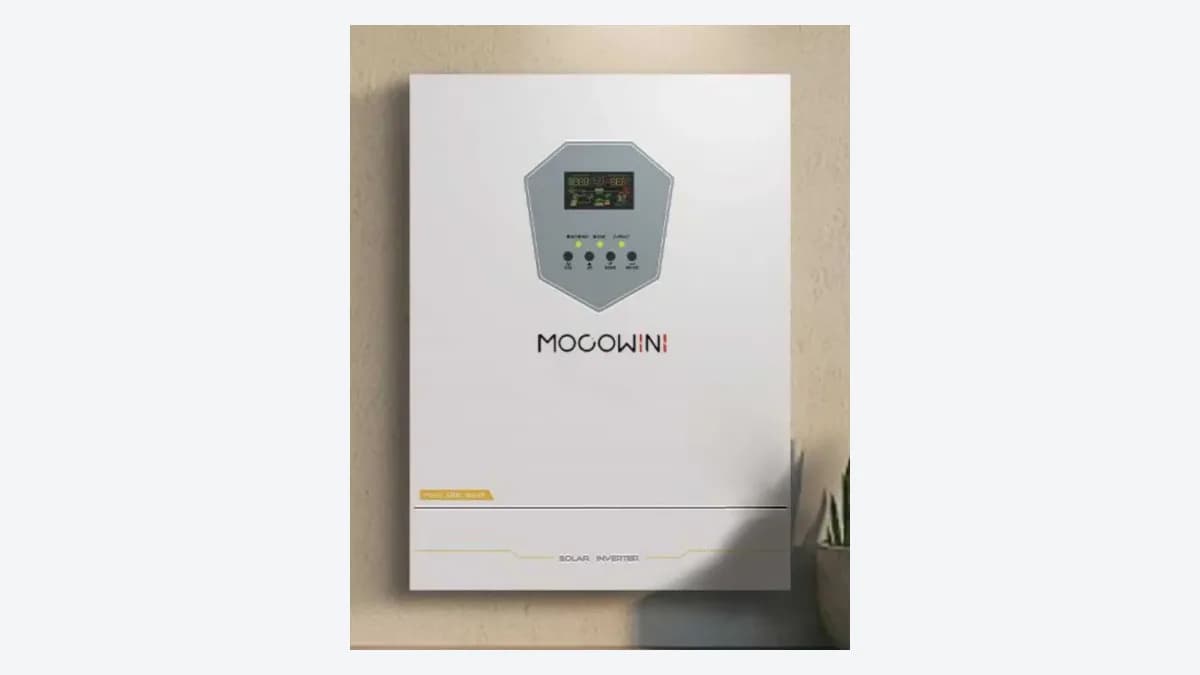
Solar panels produce direct current (DC), while homes and buildings use alternating current (AC). The inverter does this conversion. It also decides how the system behaves: what happens in a power cut, whether a battery can be connected and where surplus energy goes.
The three main types
| Type | How it works | Who it suits |
| On-grid | Uses panel energy together with the grid. Usually shuts down during a grid outage for safety | Stable grid, the goal is a lower bill |
| Hybrid | Manages panels, battery and grid together | Anyone who wants a lower bill and backup power during outages |
| Off-grid | Runs on panels and batteries without the grid | Places with no grid or a very unstable one |
How to choose the power
The inverter must cover the total power of the devices running at the same time. Motor-driven devices such as air conditioners, pumps and refrigerators briefly draw more than their rated power when starting, so you need some margin. Panel power must also suit the inverter's input limits. We check this in the design.
Why battery voltage matters
Hybrid and off-grid inverters work with a battery of a specific voltage, so the two must be chosen together. These are the MOGOWIN hybrid inverters in our catalogue:
| Model | Rated power | Battery voltage |
| QD2012MH | 1.6 kW | 12 V |
| QD3624MH | 3.6 kW | 24 V |
| QD6248MH | 6.2 kW | 48 V |
| QD12048MH | 11 kW | 48 V |
These models support lithium battery BMS and also run without a battery, so a battery can be added later. If you plan one, check the voltage in advance: for example, 51.2 V battery modules work with a 48 V inverter.
Common mistakes
- Choosing by panel power alone. The load running at the same time also has to be calculated.
- Assuming an on-grid inverter works during an outage. Backup power needs a hybrid system and a battery.
- Leaving battery voltage for later. This can lead to incompatibility.
Conclusion
If outages are not a concern and the goal is a lower bill, an on-grid inverter may be enough. If you want backup power, choose hybrid. With no grid, you need an off-grid system. You can estimate the size with our solar system calculator.
Send us your monthly electricity use and the devices that run at the same time, and we will choose a suitable inverter together.